4.9 Star Google Rating


Daikin
Daikin air conditioning in Sydney, supplied, installed, repaired and serviced by licensed technicians. Split and ducted systems for homes and commercial sites, with genuine parts and honest advice.

Daikin Specialists
A Daikin system is only as good as the installation behind it. A premium inverter unit on undersized pipework, an outdoor unit jammed into a service well, or duct design that starves half the house will never perform the way the brochure promised. That is where we come in.
We size, supply, install, repair and service Daikin split and ducted systems across Sydney, for homes, apartments, offices and commercial sites. When a Daikin controller starts flashing a code, we diagnose it before we quote for parts. And when a twelve year old system is costing more each summer, we will tell you honestly whether it is worth repairing.
If you are still comparing, start with the full range of air conditioning in Sydney or see the air conditioning brands we service.

Our technicians are trained to install, service, and repair all Daikin models, from split systems to ducted units.
We offer quick response times for maintenance and emergency repairs.
Regular servicing boosts performance, lowers energy costs, and extends system life.
We deliver quality workmanship with minimal downtime or disruption.
Clogged filters, refrigerant leaks
Loose components, motor failure
Dirty coils, inefficient operation
Electrical faults, capacitor issues
Upgrading your Daikin system? Our experts assess your space, recommend the best model, and ensure a flawless installation.
Routine maintenance ensures your Daikin system operates efficiently, enhances performance, and extends its lifespan.
Every 12 months.
Every 6 months.
Every 3 Months
A well-maintained system consumes less energy.
Preventative maintenance reduces costly repairs.
Clean filters and coils eliminate dust and allergens.
Regular servicing extends your air conditioner’s operational years.

Daikin splits are the most common unit we install and the most commonly mis-specified. Capacity has to come from a heat load calculation, not a floor area guess. A west facing bedroom with single glazing carries far more load than a shaded room of the same size. We measure, calculate, then recommend from the current Daikin range and install the pipework and drainage to specification rather than to whatever is quickest on the day.
Wall and ceiling structure, the outdoor unit position and its clearances, pipe run length and fall, the drainage route, and whether the existing circuit can carry the load. If the switchboard needs work you hear about it in the quote, not after the unit is on the wall. For a wider look at options, see split system installations.
| Room | What matters most | Why |
|---|---|---|
| Bedroom | Quiet operation and airflow direction | Noise and a direct draft matter more than raw capacity |
| Living area | Even coverage across a larger volume | Longer throw and better louvre control |
| Study or home office | Efficiency at part load | Long run hours at low demand |
| Rental property | Durability and simple controls | Fewer callouts between tenancies |
| Commercial room | Duty cycle and service access | Higher hours and easier maintenance |
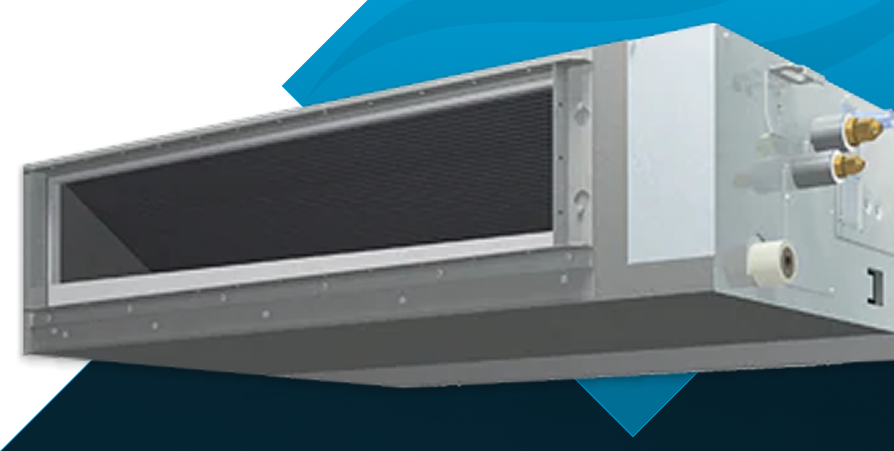
Ducted is where Daikin earns its reputation, and where the installation decides everything. One indoor unit, a duct network and zoned outlets. Get the zoning and outlet placement right and every room holds temperature. Get it wrong and you spend years adjusting a controller that cannot fix a design problem. We map duct runs, return air paths and zone dampers before anything is cut.
Zoning is the single biggest influence on running cost, well ahead of the star rating argument. Bedrooms on one zone, living areas on another, spare rooms isolated entirely. We design zones around how your household actually lives. Compare ducted air conditioning if you are weighing up whole home coverage.
Most Sydney homes have enough roof space for ducted, but raked ceilings, double brick and heritage constraints change both the approach and the cost. We check access during the assessment and tell you honestly whether ducted is viable or whether a multi split is the better answer for the building.
Daikin systems fail in recognisable ways. The difference between a good repair and an expensive one is the order you test in: airflow, pressures and electrics before anyone swaps a part.
| Symptom | Likely Daikin cause | What we test |
|---|---|---|
| Running but not cooling | Low refrigerant from a leak, or a fouled coil | Pressure test, coil condition, temperature differential |
| Ice on the indoor unit or pipes | Restricted airflow or a failing blower | Filter and duct restriction, blower operation |
| Water leaking inside | Blocked condensate drain or a blocked drain pan | Drain flow, pan condition, drainage fall |
| Tripping the safety switch | Compressor, capacitor or moisture in the electrics | Insulation resistance, winding and capacitor tests |
| Grinding or rattle | Fan bearing or debris in the housing | Fan and blower assembly inspection |
| Error code on the controller | Depends on the code | Read the code against the Daikin chart below |
On a split the fault is usually in the head, the outdoor unit or the pipework between them. On a ducted system, a large share of the faults we attend live in the ductwork, the zone dampers or the return air path, with the unit itself working perfectly. We test the whole system, so you are not paying to replace a board that was never the problem.
A Daikin controller shows a short code when the system protects itself. The code narrows the fault to a circuit, a sensor or a communication path, which is why we ask for it before attending. Every code below links to its own page with the likely cause and what to check.
| Code | Meaning | Section |
|---|---|---|
| A0 | External protection device activated | Indoor |
| A1 | Malfunction of indoor unit PCB | Indoor |
| A5 | High pressure control in heating or freeze-up protection in cooling | Indoor |
| A9 | Electronic expansion valve malfunction | Indoor |
| C4 | Malfunction of liquid pipe thermistor for heat exchanger | Indoor |
| C9 | Malfunction of suction air thermistor | Indoor |
| E3 | High pressure sensor activated | Outdoor |
| E4 | Low pressure sensor activated | Outdoor |
| E5 | Overcurrent or compressor motor lock | Outdoor |
| E6 | Compressor motor overcurrent or lock | Outdoor |
| E9 | Electronic expansion valve malfunction | Outdoor |
| F3 | Malfunction of discharge pipe temperature | Outdoor |
| H9 | Malfunction of outdoor air thermistor | Outdoor |
| U2 | Drop in voltage or main circuit overvoltage | System |
| U4 | Failure of transmission between indoor and outdoor units | System |
| UA | Indoor-outdoor unit combination fault | System |
Start with the full Daikin code list if yours is not in the table. Some less common codes also have their own pages: A3, A6, A7, E0, E1, E7 and U0. A0 is the one we see most, and it needs tracing at the unit rather than guessing, because a protection device tripping is a symptom, not a diagnosis.
Daikin recommends regular servicing to hold efficiency and keep the manufacturer warranty intact. In practice an unserviced system loses capacity slowly enough that owners stop noticing. Every indoor head has its own filter, coil and drain, so a ducted or multi head system takes longer than a single split and is priced accordingly.
| System | Interval | What gets done |
|---|---|---|
| Daikin split, home | Every 12 months | Filter, coil, drain flush, refrigerant and electrical checks |
| Daikin multi split | 12 months, 6 near the coast | Every head serviced separately, plus the condenser |
| Daikin ducted | 12 months, filters quarterly | Duct inspection, zone test, coil and drain |
| Commercial site | Every 6 months | Documented records for property managers |
| Hospitality or retail | Quarterly | Higher dust and grease load on coils |
Book Daikin servicing before summer rather than in the first hot week. If something is already failing, start with Daikin repairs and we will tell you whether it is worth fixing.
We supply and install current Daikin split and ducted packages, and we service every Daikin model common in Sydney homes, including older units where parts are still available. Current supply and install packages are listed further up this page by capacity, with models and pricing. If your model is not listed, call with the model number from the sticker on the indoor unit and we will confirm what is available.
Still deciding between system types? Compare air conditioning types first, or book an assessment and we will size it properly.
Two Daikin jobs on the same sized house can come back looking very different, and it is rarely the unit causing the gap. A Daikin quote has three moving parts: the capacity you genuinely need, how many zones you want to run independently, and how hard it is to get pipework and ductwork into your roof or wall. A single storey home with clear roof space is a simpler job than a double brick terrace where every run is threaded through existing structure. We work those three out on site, then quote the whole scope rather than a headline that grows later.
The cheapest Daikin quote is usually the one with the most left out, not the one with the thinnest margin. Put two quotes side by side and check four things before deciding: is the capacity calculated or guessed from floor area, are the zones counted the same way, does one include the electrical work while the other leaves it to you, and does the pipework allowance cover your actual run. Where a quote is silent on any of those, ask. A written scope that names what is excluded is worth more than a lower figure that becomes a variation halfway through.
What Sydney homeowners and property managers ask us most about Daikin systems.
A Daikin system costs more than a budget brand and less than the premium imports. The exact figure depends on capacity, whether it is split or ducted, how long the pipe run is and whether electrical work is needed. Our current Daikin supply and install packages are listed further up this page with models and pricing, and anything not listed gets a written quote after assessment.