4.9 Star Google Rating




Error Code
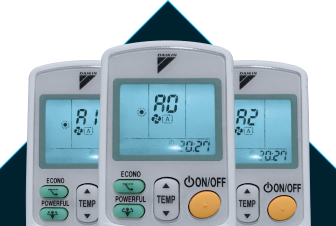
A9 points at the electronic expansion valve, the metering device that controls how much refrigerant enters the indoor coil. The board drives the valve in small steps and expects it to respond. When it does not, the system loses control of refrigerant flow, and cooling or heating performance drops away before the unit eventually trips. It is a precise part, and a fault here shows up as poor performance first.
The valve has a motor winding and a needle that moves in fine increments. Contaminants in the circuit, a worn winding or a seized needle will all stop it responding. A valve that fails open cools poorly and one that fails closed stops the coil working at all. Either way it is a part replacement rather than a clean.
Debris or a restriction upstream of the valve starves it, and the board reads that as a valve that will not respond. The valve is often blamed for a blockage sitting somewhere else in the circuit. A temperature check across the likely restriction points tells a technician which it actually is before parts are ordered.
The valve connects to the board through a multi pin plug, and one poor pin is enough to make the valve appear dead. Vibration, heat and moisture at that plug are common. Reseating and inspecting it is quick and free, so it comes before any diagnosis of the valve body itself.
The board drives the valve through a small output stage, and a fault there will produce an A9 on a perfectly good valve. If a known good valve behaves the same way, the problem is upstream on the board. This is the case that catches people out, because the obvious part has already been replaced.
Temperatures are measured at the valve inlet and outlet and at the likely restriction points. A blockage shows as a temperature difference across a component that should not have one. Finding it before replacing the valve avoids paying for a part that was never the fault.
With the system off the valve is checked for continuity across its windings and for a needle that moves when driven. A valve that does not respond to a drive signal, on a circuit with known good wiring, has failed. The replacement is a sealed system job and needs proper recovery and evacuation.
The multi pin connector at the board is inspected for corrosion and pushed firmly home, and the harness is checked for pinches along its run. Each conductor is tested for continuity. On an intermittent A9 this step alone often resolves it, and it costs nothing but time.