4.9 Star Google Rating




Error Code
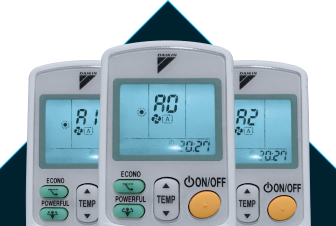
A1 on a Fujitsu means the indoor control board has flagged a fault in itself. In most cases the unit stops responding to the remote, or it runs for a few seconds and shuts down with the indoor head showing nothing useful. Because the board is reporting on its own condition, the code opens the diagnosis rather than closing it, and the checks around the board decide whether it actually needs replacement.
The harness plugs onto the board and carries every signal the indoor unit uses. Years of vibration work those plugs loose, and in a coastal ceiling the pins pick up a film that interrupts contact. Reseating every connector and cleaning the pins is a five minute job that has saved a great many boards from being thrown away.
The board is the most exposed electronics in the indoor unit. A surge down the supply, or a voltage that dips each time the compressor starts, can damage its low voltage side without leaving a mark. Units sharing a circuit with a large motor are the usual setting, and a surge protector at the isolator is cheap insurance against a repeat.
Every component on the board expands and contracts with the system, several times a day, for years. That cycling dries out capacitors and cracks solder joints on the heavier parts. It is a slow failure rather than a sudden one, which is why it turns up on an older Fujitsu that had been running without complaint for a decade.
Switch the unit off at the isolator, wait a full five to ten minutes, then restore power. That lets the board discharge and restart cleanly instead of sitting in a fault loop. If A1 clears and stays away the board caught a transient event. If it returns within the hour, the fault is real and further resets achieve nothing.
With the power off, the board is examined for burnt tracks, swollen capacitor tops, corrosion across the pins and any sign of insect or water ingress. Anything visible means replacement. A board that looks clean is tested further before it is condemned, because appearance alone is not a diagnosis.
The supply is measured under load, while the compressor is running, not just at rest. A circuit that reads correctly with the system idle can fall away badly when the compressor starts. Loose neutrals, undersized cable and shared circuits all show up here, and an unstable supply will damage a new board as readily as the old one.
Where the code survives a reset, the supply checks out and the board shows no visible damage, the next step is testing the board’s outputs rather than guessing. A technician confirms whether the fault sits on the board or in something the board is driving. Replacing a board on a hunch is the most expensive way to solve A1.