4.9 Star Google Rating



 Skip to main content
Hisense
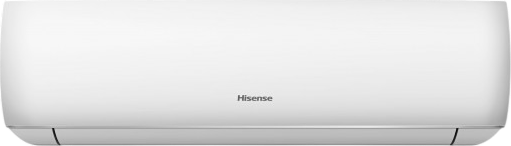
Looking for Hisense Air Conditioning specialists in Sydney? Skycon Air is Sydney’s leading choice for reliable Hisense air conditioning supply, installation, and repair services.
Hisense Air Conditioning

We’re experienced in the installation, servicing, and repair of all Hisense systems.
Our team provides rapid response times for maintenance and repairs.
Regular maintenance maximises efficiency, reducing energy bills.
We guarantee quality service and minimal disruption.
Blocked filters, refrigerant issues.
Loose components, motor failure.
Dirty coils, inefficient operation.
Electrical faults, capacitor problems.
Our experts will recommend and install the best Hisense system for your needs.
Routine maintenance helps your Hisense unit run efficiently, saving on energy costs and reducing the need for repairs.
Every 12 months.
Every 6 months.
Every 3 months
Well-maintained systems are more energy-efficient.
Regular maintenance prevents major issues.
Clean filters reduce allergens.
Servicing helps your unit last longer.

Hisense sits at the value end of the market, and that is exactly why sizing matters more, not less. A cheaper unit that is oversized or badly positioned will cost you more over its life than a mid range unit specified properly. We run the heat load calculation, pick the capacity, and install to specification rather than to whatever is fastest on the day.
Wall structure and mounting position, the outdoor unit location and its clearances, pipe run length and fall, the condensate route, and whether the existing circuit can carry the unit. Cheap installs fail on the boring details: a drain with no fall, a condenser boxed into a service well, pipework run too long. We quote the detail up front so nothing appears as a surprise line item later. For a wider comparison, see split system installations.
| Situation | Why it fits |
|---|---|
| Rental property or investment unit | Reasonable cost, simple controls, easy to replace a head later |
| Bedroom or secondary room | Duty cycle is low, so premium efficiency buys less here |
| Short term ownership under five years | Upfront saving outweighs long term running cost gain |
| Granny flat or studio | Single room load, single head, straightforward install |
| Whole home premium comfort | Not the best fit, a mid or premium inverter will serve better |
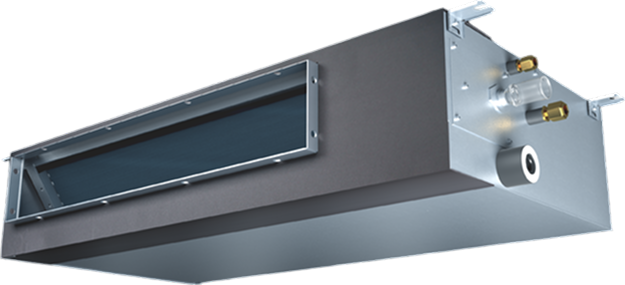
Ducted is where a value brand needs the most care, because the ductwork carries more of the performance than the badge does. Outlet placement, return air sizing and zone design decide whether every room holds temperature. We design that before a hole is cut, and we test airflow at each outlet rather than only at the unit.
Most Sydney homes have usable roof space, but raked ceilings, double brick and heritage detail change both approach and cost. We check access during the assessment and tell you if ducted is not viable, rather than selling it and discovering the problem later. Compare ducted systems if whole home coverage is the goal.
Hisense faults follow predictable patterns, and the codes below narrow them quickly. What matters is testing in the right order so you are not paying for a board when the real fault is a five dollar sensor.
| Symptom | Likely cause | What we test |
|---|---|---|
| Running but not cooling | Low refrigerant, or a dirty condenser coil | Pressure test, coil condition, temperature differential |
| Ice on the indoor unit | Restricted airflow from a blocked filter or failing blower | Filter and duct restriction, airflow, blower operation |
| Water leaking inside | Blocked condensate drain or a full drain pan | Drain flow, pan condition, drainage fall |
| Not responding to the controller | Communication fault between indoor and outdoor | Interconnecting cable, connectors, then the boards |
| Tripping the safety switch | Moisture in the electrics or a failing component | Insulation resistance, winding and capacitor tests |
| Loud noise from the head | Fan motor bearings or debris in the housing | Fan assembly inspection under power |
Hisense controllers display a two character code when the system protects itself. The code narrows the fault to a sensor, a circuit or a communication path, which is why we ask for it on the phone. Every code below links to its own page with the likely cause and what to check.
| Code | Meaning | Section |
|---|---|---|
| E1 | Sensor failure | Indoor |
| E3 | Temperature sensor error | Indoor |
| E4 | Communication error | Indoor |
| E5 | Low refrigerant | Indoor |
| E6 | Fan motor malfunction | Indoor |
| F1 | Outdoor PCB failure | Outdoor |
| F3 | High pressure protection | Outdoor |
| F4 | Low pressure protection | Outdoor |
Two patterns worth knowing before you call. E5 low refrigerant is a leak symptom, not a top up request, so the gas has to be traced or it will be back within weeks. F3 high pressure protection is usually airflow or a fouled outdoor coil rather than a failed sensor, and it clears once the restriction is fixed. Start with the full Hisense code list if yours is not here.
Regular servicing is where a value system earns its keep. Left alone, a Hisense unit loses capacity gradually until the first hot week exposes it, and that is always the expensive week to discover a problem. Every indoor head has its own filter, coil and drain, so a ducted or multi head system takes longer and gets priced accordingly.
| System | Interval | What gets done |
|---|---|---|
| Hisense split, home | Every 12 months | Filter, coil, drain flush, refrigerant and electrical checks |
| Hisense multi split | 12 months, 6 near the coast | Every head serviced separately, plus the condenser |
| Hisense ducted | 12 months, filters quarterly | Duct inspection, zone test, coil and drain |
| Commercial | Every 6 months | Higher duty cycle, documented service records |
Book Hisense servicing before summer. If something is already failing, start with air conditioning repairs. Compare air conditioning types or see the brands we service.
Hisense is a value to mid brand, and the honest way to think about the figure is over ten years rather than over the invoice. A cheaper unit that needs replacing sooner, or that costs more to run because it loses efficiency quickly, is not the cheaper option. So the quote question is not just what it costs today. It is what it includes: the pipe run, the electrical work, the drain, commissioning, and whether the capacity was calculated for the room or picked off a list.
Ask three questions beyond the figure. Is the capacity calculated, because an oversized unit short cycles and an undersized one runs flat out, and both shorten the life. Is the drainage specified, because a bad fall is the most common reason a value install ends up leaking. Is the electrical work inside the scope. Then consider servicing over the life of the unit, since a system that is never cleaned loses efficiency every season whether it was cheap or expensive.
What Sydney homeowners and property managers ask us most about Hisense systems.
It depends on capacity, whether it is split or ducted, the pipe run length and whether electrical work is needed. Hisense sits at the value end, so the unit cost is lower than a premium brand, but installation labour is the same either way. Current supply and install packages are listed on this page, and anything not listed gets a written quote after assessment.