4.9 Star Google Rating




General Airstage
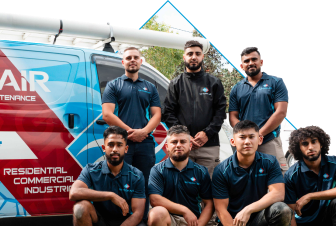
Looking for General Airstage specialists in Sydney? Skycon Air is Sydney's trusted choice for General Airstage commercial air conditioning supply, installation, and repair services.
General Airstage Air Conditioning
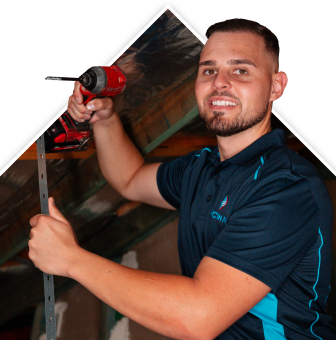
Our technicians are fully trained to design, install, service, and repair all General Airstage models, from light commercial split systems to large-scale multi-zone setups across Sydney.
We respond quickly to maintenance requests and emergency breakdowns, keeping your system running with minimal disruption to your operations.
General Airstage systems adapt output to real-time demand. Regular servicing ensures you always get peak efficiency and lower running costs.
From boutique offices to large commercial buildings, we handle General Airstage installations and maintenance at any scale across the Sydney metro area.
Dirty filters, refrigerant imbalance, or blocked coils.
Wiring faults or control board issues causing system-wide errors.
Inefficient zoning configuration or dirty heat exchangers.
Electrical faults, tripped breakers, or inverter board failure.
Planning a new General Airstage system? Our experts assess your home or office, recommend the most efficient model for your needs, and handle the installation seamlessly from start to finish.
Regular maintenance ensures your General Airstage system continues to operate at peak performance, enhances efficiency, and extends its lifespan.
Every 12 months
Every 6 months
Every 3 months
A well-maintained Airstage system runs at optimised efficiency, directly reducing your electricity costs.
Preventative servicing catches minor issues before they become costly system-wide failures.
Clean filters and coils remove dust, allergens, and airborne pollutants from your space.
Routine maintenance protects your General Airstage investment and delays costly replacements.
General systems are specified when the building needs more flexibility than a single split can offer, but does not justify a full commercial plant. That could be a home with several rooms to treat, a small office, or a mixed residential and commercial building. The installation is where those systems succeed or fail, because the design work behind the pipework and controls carries more of the performance than the equipment does.
We start with the load, not the catalogue. Room by room heat load, then the head or indoor unit that suits each space, then the outdoor plant sized on how the building will actually be used rather than on all units running flat out together. For a wider comparison, see split system installations.
| Decision | Why it decides the outcome |
|---|---|
| Room by room load | Each indoor unit needs its own capacity, not a share of the total |
| Simultaneous use | Whether every room runs at once changes how the outdoor unit is sized |
| Pipe runs and height difference | Long runs and vertical lift limits are set by the manufacturer, not by convenience |
| Condensate strategy | Where gravity drainage is impossible, pumps need planning, not retrofitting |
| Controls and zoning | Individual control is the reason to choose these systems, so it gets designed in |
Where a building needs whole home or whole floor coverage, ducted with zones is usually the cleaner answer than several separate heads. We map duct runs, return air paths and zone dampers before anything is cut, then confirm airflow at each outlet rather than only at the unit.
Zoning is the biggest single influence on what a system costs to run. Bedrooms on one zone, living areas on another, spare rooms isolated. Without it you pay to condition the entire building every time you switch it on. Compare ducted systems if whole home coverage is the goal.
The faults we attend on these systems fall into two groups: the indoor side, where a head stops or loses capacity, and the outdoor side, where a board, sensor or pressure condition takes the whole system down. Telling those apart quickly is the difference between a repair and a replacement quote.
| Symptom | Likely cause | What we test |
|---|---|---|
| One indoor unit stops, others run | Local fault at that unit, or a communication break | Unit fault code, then the interconnecting cable and connectors |
| Every unit stops together | Outdoor plant fault, pressure protection or power supply | Outdoor fault code, pressures, supply voltage |
| Running but not cooling | Low refrigerant, or a fouled coil | Pressure test, coil condition, temperature differential |
| Water leaking inside | Blocked condensate drain or a failed pump | Drain flow, pump operation, drainage fall |
| Tripping the safety switch | Moisture in the electrics or a failing component | Insulation resistance, winding and capacitor tests |
| Noisy outdoor unit | Fan blade, bearing, or a loose mount | Fan assembly and mount inspection under power |
One note specific to these systems: when several indoor units share one outdoor plant, a single failed unit can pull the whole system into protection. That is why we test the system as a whole rather than only the unit with the complaint, and why a fix on one head is not signed off until every other head has been run and confirmed.
Servicing holds efficiency and keeps the manufacturer warranty intact. It matters more than usual on multi unit systems, because one neglected indoor unit drags on the shared outdoor plant. Every indoor unit has its own filter, coil and drain, so the interval is per unit, not per system.
| System | Interval | What gets done |
|---|---|---|
| Residential split or ducted | Every 12 months | Filter, coil, drain flush, refrigerant and electrical checks |
| Multi indoor units | 12 months, 6 near the coast | Every indoor unit serviced separately, plus the outdoor plant |
| Small commercial | Every 6 months | Higher duty cycle, documented service records |
| Hospitality or retail | Every 3 months | Grease and airborne load, plus documented records |
Book servicing before summer. If something is already failing, start with air conditioning repairs.
When a controller displays a code, write it down along with the model number from the indoor unit sticker and call us. We identify it against the manufacturer technical data for your specific model rather than guessing from a generic chart, because the same code can mean different things across ranges.
Our air conditioning error codes library covers the brands with dedicated code pages, including Daikin, Fujitsu, Mitsubishi Electric, ActronAir, Samsung, Rinnai, Haier, LG, Hisense, Hitachi, Carrier and Toshiba. If General codes are not listed there yet, call and we will look yours up directly.
Compare air conditioning types or see the full list of brands we service. For anything urgent, our air conditioning Sydney team can triage it over the phone.
An Airstage job is a project, not a single unit sale, and it gets quoted like one. What moves the scope is the plant position and whether there is space for it, the riser and pipe route between floors, how many independent tenancies or zones need their own control, whether the building needs a switchboard upgrade to carry the plant, and how much access work the installation needs. Two buildings with the same floor area can be very different jobs because of those five things.
Compare the capacity schedule first, because a cheaper quote is often sized to a different assumption. Then compare the control and metering scope, since tenancy billing is where budgets blow out if it is left vague. Then check what builder and electrical works are inside versus excluded, and whether commissioning and documentation are included. On a multi storey job, the excluded items are where the real difference lives.
What Sydney homeowners and property managers ask us most about General systems.
It depends on how many indoor units you need, the capacity of each, how far they sit from the outdoor plant and whether electrical work is required. Multi unit systems are a bigger design job than a single split, so the quote reflects design as well as equipment. We assess on site and give you a written figure before anything is ordered.